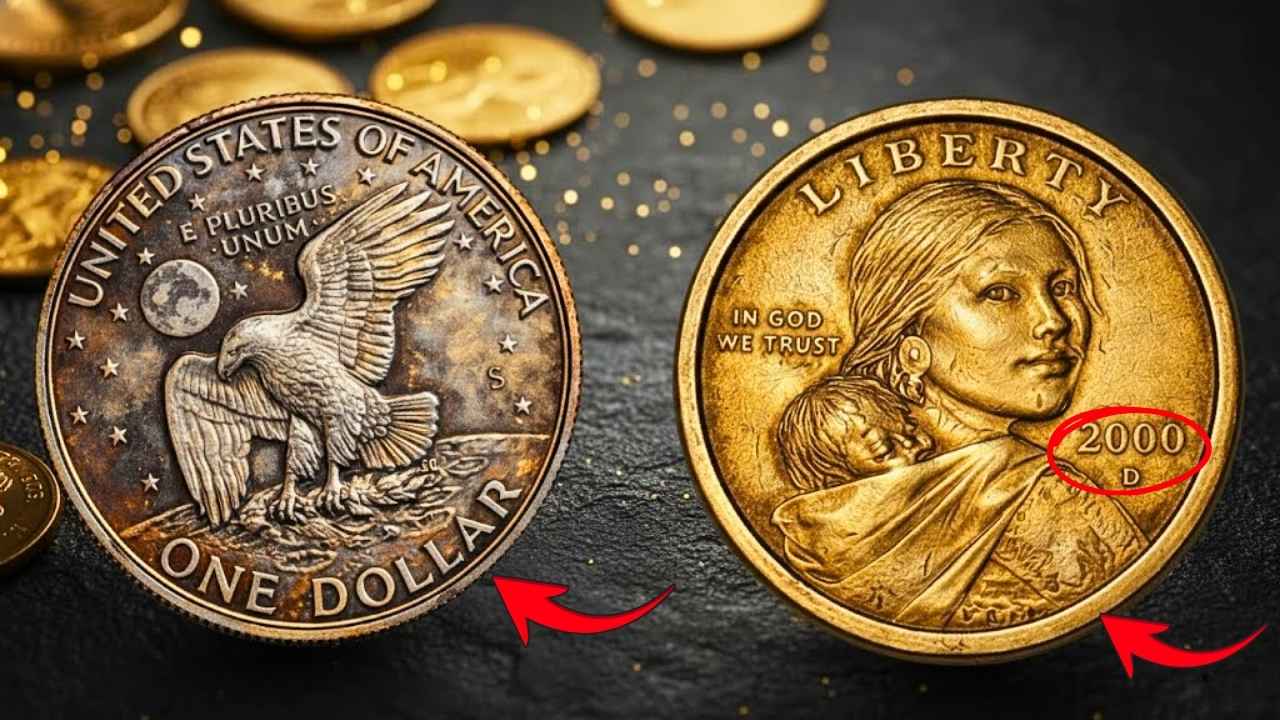
The Sacagawea dollar, first introduced in 2000, was designed to honor Sacagawea, the Shoshone woman who played a crucial role in guiding the Lewis and Clark expedition. Known for its golden color and distinctive design, the coin quickly became a favorite among collectors. While most Sacagawea dollars are worth only their face value, certain rare editions and error coins have shocked the numismatic world with values reaching thousands, even millions, of dollars. This guide explores the most valuable Sacagawea dollar coins, their history, and how collectors can identify these hidden treasures.
The Origins of the Sacagawea Dollar
The U.S. Mint introduced the Sacagawea dollar to replace the Susan B. Anthony dollar. Its design features Sacagawea carrying her infant son, Jean Baptiste, on the obverse, while the reverse showcases an eagle in flight. The coin was minted in a golden hue using a manganese‑brass alloy, giving it a distinctive appearance.
Although the coin was intended for circulation, it never gained widespread popularity in everyday transactions. Instead, it became a collector’s item, with special editions and errors adding to its allure.
The 2000 Sacagawea Dollar Cheerios Edition
One of the most famous and valuable Sacagawea dollars is the 2000 Cheerios edition. As part of a promotional campaign, the U.S. Mint distributed these coins in cereal boxes. What makes them unique is the enhanced detail on the eagle’s tail feathers, distinguishing them from standard issues.
Collectors prize these coins for their rarity and distinctive design. In auctions, Cheerios Sacagawea dollars have sold for thousands of dollars, making them one of the most sought‑after varieties.
The 2000 Sacagawea Dollar Mule Error
Perhaps the most legendary Sacagawea dollar error is the mule coin. This rare variety was mistakenly struck with the obverse of a Washington quarter and the reverse of a Sacagawea dollar. The result was a hybrid coin that should never have existed.
Only a few specimens were discovered, and they quickly became highly valuable. Mule errors have sold for hundreds of thousands of dollars, proving that minting mistakes can create extraordinary treasures.
The 2000‑P Sacagawea Dollar Proof Coin
Proof coins are specially struck for collectors, featuring sharp details and mirror‑like finishes. The 2000‑P Sacagawea proof coins are particularly valuable when preserved in pristine condition. Their limited mintage and superior quality make them highly collectible, with values far exceeding face value.
The 2007 Sacagawea Dollar with Presidential Edge Lettering
In 2007, the U.S. Mint introduced edge lettering on Presidential $1 coins, including the year, mint mark, and motto. Some Sacagawea dollars were mistakenly struck with this edge lettering, creating a rare error variety. Collectors quickly recognized their uniqueness, and values soared compared to standard issues.
The 2009 Native American Dollar Series
The Native American dollar series, introduced in 2009, continued the Sacagawea design but added new reverse images each year to honor Native American contributions. Certain editions, especially those with low mintages or unique designs, have become highly collectible. While not all are worth fortunes, some varieties command impressive prices among enthusiasts.
Identifying Valuable Sacagawea Dollars
For collectors, identifying valuable Sacagawea dollars requires careful attention to detail. Here are some tips:
- Look for unique varieties such as the Cheerios edition or mule errors
- Examine the eagle’s tail feathers for enhanced detail in the Cheerios coins
- Check for unusual edge lettering or missing elements
- Assess the condition, as coins in proof or uncirculated states are worth more
- Consult professional grading services for authentication and valuation
By learning to recognize these features, collectors can distinguish ordinary coins from rare treasures.
The Market for Sacagawea Dollar Coins
The market for Sacagawea dollars is driven by rarity, demand, and condition. While most coins are worth only face value, rare varieties can fetch thousands or even millions at auctions. Wealthy collectors compete for these unique items, driving values higher.
Error coins and promotional editions are particularly valuable, as they represent anomalies in the minting process. For collectors, owning such coins is both a financial investment and a piece of history.
Why Sacagawea Dollars Stand Out
Sacagawea dollars hold a special place in American coinage. Their design honors a significant historical figure, while their golden color makes them visually distinctive. Rare varieties and errors add to their appeal, ensuring that they remain popular among collectors.
Unlike some coins that fade into obscurity, Sacagawea dollars continue to capture attention, proving that modern currency can produce treasures worth a fortune.
Key Highlights
- Sacagawea dollars were introduced in 2000 to honor Sacagawea and her role in American history
- Rare varieties include the 2000 Cheerios edition, mule errors, and proof coins
- Mule errors combining a Washington quarter obverse with a Sacagawea reverse are worth hundreds of thousands
- Cheerios editions with enhanced eagle tail feathers are highly collectible
- Edge lettering errors and Native American series coins add to the coin’s rarity
- Condition, rarity, and historical significance are key factors in determining value
Final Words
Rare Sacagawea dollar coins remind us that everyday currency can hold extraordinary value. From promotional editions to minting errors, these coins capture moments in history while offering financial rewards to those who recognize their significance. For collectors, they represent both passion and opportunity. For casual enthusiasts, they serve as a reminder to look closely at the change in their pockets.
The world of Sacagawea dollars is a fascinating blend of history, art, and economics. As interest in numismatics continues to grow, these coins will remain treasured artifacts that connect us to the past while offering tangible value in the present.