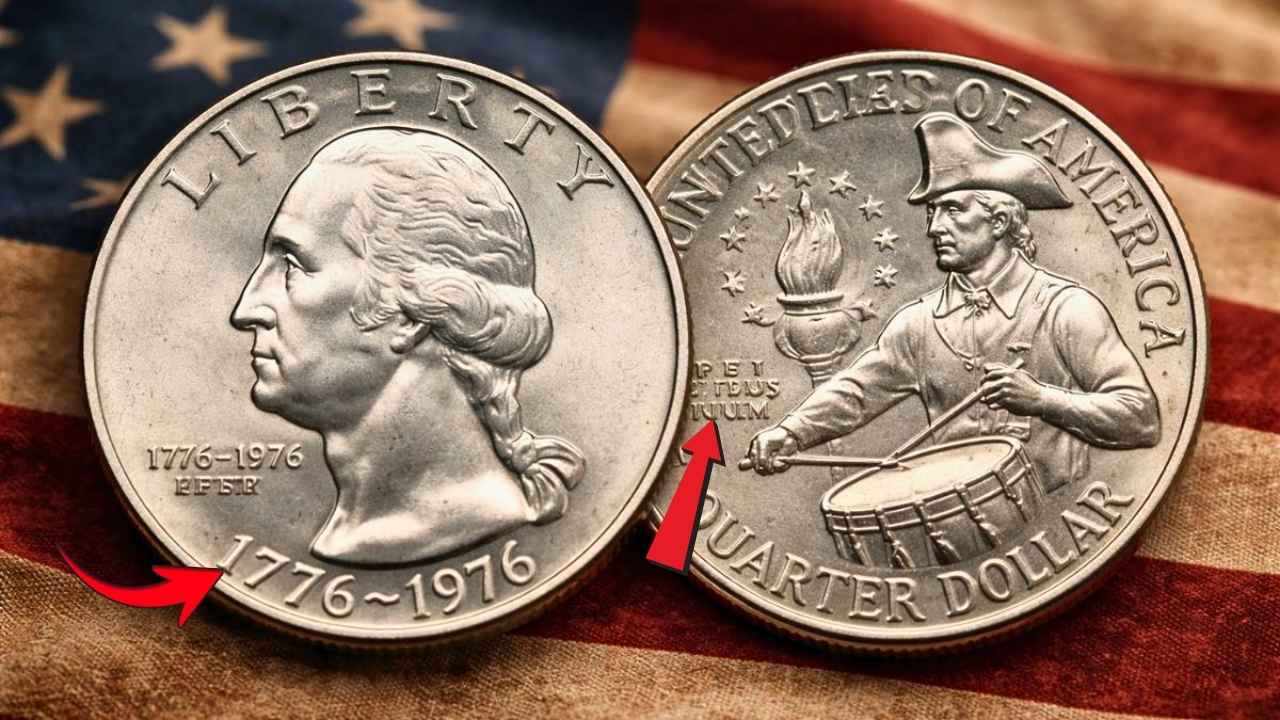
The Bicentennial quarter, minted in 1975 and 1976 to celebrate America’s 200th anniversary of independence, remains one of the most iconic coins in U.S. history. Featuring a special reverse design with a colonial drummer and dual dating of 1776–1976, this coin was produced in massive numbers. While most Bicentennial quarters are worth only face value, certain rare errors and special editions have become highly valuable to collectors. This guide explores the history, varieties, and rare errors that make some Bicentennial quarters worth far more than twenty‑five cents.
The History of the Bicentennial Quarter
In the mid‑1970s, the U.S. Mint sought to commemorate the nation’s bicentennial with a special coinage program. The quarter, half dollar, and dollar all received unique designs. Jack L. Ahr’s winning design for the quarter depicted a colonial drummer with a torch surrounded by thirteen stars, symbolizing the original colonies.
The coins were struck in both Philadelphia and Denver for circulation, while proof and uncirculated sets were produced in San Francisco. Millions were minted, ensuring that nearly every American encountered these coins in daily life.
Common Bicentennial Quarters
Most Bicentennial quarters are common and circulate at face value. They were produced in such large quantities that even today they can be found in pocket change. Circulated examples generally hold no premium, while uncirculated and proof versions may be worth a few dollars depending on condition.
Rare Errors That Increase Value
Certain minting errors have made some Bicentennial quarters highly collectible. These include:
- Double Die Errors: Coins showing doubling in the date or lettering are rare and valuable.
- Off‑Center Strikes: Quarters struck off‑center can command premiums depending on the degree of error.
- Clipped Planchets: Coins missing a portion of the metal due to a minting mistake are prized by collectors.
- Wrong Planchet Errors: Bicentennial designs struck on planchets intended for other denominations are extremely rare and valuable.
These errors can elevate the value of a Bicentennial quarter from a few dollars to hundreds or even thousands.
Silver Bicentennial Quarters
In addition to circulation strikes, the U.S. Mint produced special silver Bicentennial quarters for collectors. These coins were included in proof and uncirculated sets and contain 40 percent silver. Because of their composition and limited mintage, silver Bicentennial quarters are more valuable than standard copper‑nickel issues. High‑grade examples can sell for $10 to $20 or more, while rare varieties may command higher prices.
Collector Demand and Market Trends
The Bicentennial quarter holds nostalgic appeal for many Americans who remember the celebrations of 1976. This emotional connection, combined with the coin’s unique design, ensures steady collector demand. While most examples remain common, rare errors and silver editions continue to attract strong interest at auctions and coin shows.
How to Identify Valuable Bicentennial Quarters
Collectors should pay close attention to the following details:
- Check for mint marks: Philadelphia coins have no mint mark, while Denver coins show a “D” and San Francisco coins show an “S.”
- Examine the coin for errors such as doubling, off‑center strikes, or clipped planchets.
- Look for silver issues, which are heavier and have a different edge coloration.
- Consider professional grading to confirm authenticity and establish value.
Tips for Collectors
- Search proof and uncirculated sets for silver Bicentennial quarters.
- Inspect coins carefully for minting errors.
- Store coins properly to preserve condition.
- Stay informed about auction results and collector trends.
- Consider professional grading for rare varieties.
The Joy of Collecting Bicentennial Quarters
Beyond financial value, collecting Bicentennial quarters offers a connection to history. Each coin represents a celebration of America’s 200th anniversary and reflects the pride of a nation. For many collectors, the thrill lies not only in profit but in the discovery of hidden treasures that others overlook.
Key Highlights
- The Bicentennial quarter was minted in 1975 and 1976 to celebrate America’s 200th anniversary.
- Most examples are common and worth face value.
- Rare errors such as double dies, off‑center strikes, and wrong planchets can be highly valuable.
- Silver Bicentennial quarters were produced for collectors and hold greater value.
- Collector demand remains strong due to nostalgia and historical significance.
Final Words
The Bicentennial quarter is more than just a coin; it is a symbol of America’s heritage and celebration of independence. While most examples remain common, rare errors and silver editions can be worth significant amounts. For collectors, the pursuit of these coins is not just about wealth but about preserving history and enjoying the thrill of discovery.
Whether found in circulation or purchased at auction, the Bicentennial quarter continues to inspire collectors with its unique design and historical importance. As long as coins remain in circulation and collections are passed down, the dream of finding a rare Bicentennial quarter worth far more than twenty‑five cents will live on.