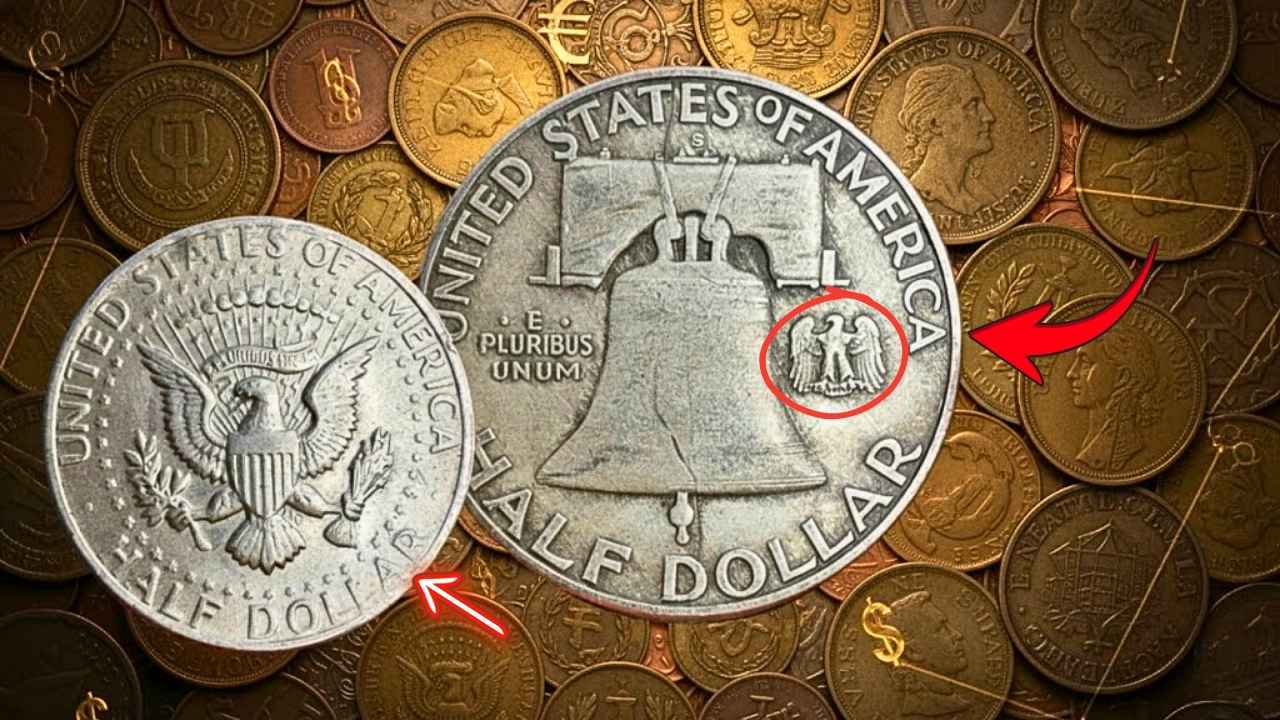
Half dollars have long been a staple of American coinage, representing both everyday commerce and historical artistry. Among them, the Kennedy and Franklin Half Dollars stand out as two of the most iconic series. While millions of these coins were minted, certain rare dates, mint marks, and varieties have become highly valuable, often worth far more than their face value. For collectors, these coins represent silent fortunes waiting to be discovered. This guide explores the history, rarity, and value of Kennedy and Franklin Half Dollars, highlighting the pieces that can transform a simple collection into a treasure trove.
The Franklin Half Dollar Legacy
The Franklin Half Dollar was introduced in 1948, featuring Benjamin Franklin on the obverse and the Liberty Bell on the reverse. Designed by John R. Sinnock, it was the first U.S. coin to depict a non‑president. Franklin’s image was chosen to honor his contributions as a statesman, inventor, and philosopher. The coin was struck until 1963, when it was replaced by the Kennedy Half Dollar following President Kennedy’s assassination.
Franklin Half Dollars were minted in 90 percent silver, making them valuable not only for their numismatic appeal but also for their metal content. While many are common, certain dates and mint marks are rare and command strong premiums. Collectors particularly seek coins with full bell lines on the reverse, which indicate sharp detail and add significant value.
Key Franklin Half Dollar Rarities
Several Franklin Half Dollars stand out as especially valuable:
- The 1949‑S is a scarce early issue, particularly in high grades.
- The 1955 has the lowest mintage of the series, making it a key date.
- The 1963‑D, as the final year of issue, holds historical significance.
- Coins with full bell lines are highly prized, often worth multiples of standard examples.
These rarities can range from hundreds to thousands of dollars depending on condition, making them essential for serious collectors.
The Kennedy Half Dollar Story
The Kennedy Half Dollar was introduced in 1964 as a tribute to President John F. Kennedy. Its design, created by Gilroy Roberts and Frank Gasparro, features Kennedy’s portrait on the obverse and the Presidential Seal on the reverse. The coin was immediately popular, with millions of Americans eager to own a piece of history.
Initially struck in 90 percent silver, the composition was reduced to 40 percent in 1965 and later changed to copper‑nickel clad in 1971. Despite declining use in circulation, the Kennedy Half Dollar remains a beloved coin among collectors, with certain issues achieving remarkable value.
Key Kennedy Half Dollar Rarities
Several Kennedy Half Dollars are considered rare and valuable:
- The 1964 Accented Hair Proof, featuring extra detail in Kennedy’s hair, is a scarce variety.
- The 1970‑D, struck in 40 percent silver and only released in mint sets, is highly sought after.
- The 1998‑S Matte Proof, with its distinctive finish and low mintage, is a modern rarity.
- Error coins, such as double dies and off‑center strikes, can be worth thousands.
These coins represent some of the most valuable pieces in the Kennedy series, often commanding strong prices at auction.
Rare Error Coins
Error coins add excitement to both the Franklin and Kennedy series. Examples include double die varieties, off‑center strikes, and coins struck on the wrong planchet. These errors are rare and often discovered by chance, making them valuable additions to collections. Depending on the type and severity of the error, values can range from hundreds to thousands of dollars.
Value by Condition
Condition plays a crucial role in determining the value of half dollars. Coins are graded on the Sheldon scale, from Poor (P‑1) to Mint State (MS‑70).
- Circulated silver issues may be worth slightly above their melt value.
- Uncirculated examples can fetch significant premiums.
- Proof coins with deep cameo contrast are especially valuable.
- Rare varieties and errors can reach thousands or more.
Professional grading adds credibility and ensures authenticity, which is especially important for high‑value coins.
Collecting Tips
For collectors interested in Kennedy and Franklin Half Dollars, here are some practical tips:
- Learn key dates and varieties to recognize valuable coins.
- Examine coins carefully for errors or unusual features.
- Consider professional grading for rare varieties to protect against counterfeits.
- Store coins in protective holders to preserve condition.
- Follow auction results and market trends to understand current values.
Market Trends
The market for Kennedy and Franklin Half Dollars remains strong. Auction records show that rare varieties consistently attract competitive bidding. Silver issues continue to be in demand, especially as precious metal prices fluctuate. Modern rarities like the 1998‑S Matte Proof prove that even recent issues can hold long‑term value. As interest in numismatics grows, half dollars are likely to remain popular among collectors.
Why Collectors Value These Coins
Collectors are drawn to Kennedy and Franklin Half Dollars for both sentimental and financial reasons. The Franklin series honors one of America’s founding fathers, while the Kennedy series commemorates a beloved president. Their silver content adds tangible value, while rare varieties provide excitement and challenge for numismatists. Whether collected for investment or passion, these coins remain a cornerstone of U.S. coin collecting.
Key Highlights
- Franklin Half Dollars were minted from 1948 to 1963 in 90 percent silver.
- Key Franklin rarities include the 1949‑S, 1955, and coins with full bell lines.
- Kennedy Half Dollars were introduced in 1964 to honor President Kennedy.
- Rare Kennedy varieties include the 1964 Accented Hair Proof, 1970‑D, and 1998‑S Matte Proof.
- Errors and condition play a major role in determining value.
Final Words
Kennedy and Franklin Half Dollars represent more than just currency; they are pieces of American history and artistry. While many examples remain common, certain dates, mint marks, and varieties are worth serious money. For collectors, the thrill lies in discovering these hidden treasures and preserving them for future generations. Whether you are just beginning your numismatic journey or adding to an established collection, half dollars offer both sentimental value and financial potential, proving that silent fortunes can be found in the most unexpected places.